What's New in Jumper - April 22, 2026
Jumper v2026.04.22 is now available for macOS (Apple silicon + Intel) and Windows.
Local LLM integration with LM Studio
You can now run a fully local LLM in LM Studio and have it talk to Jumper just like Claude or Codex. That means you can use models like Gemma or Qwen for agentic editing workflows while keeping the model and its tool calls on your own machine.
We also published a new step-by-step guide showing how to set this up.
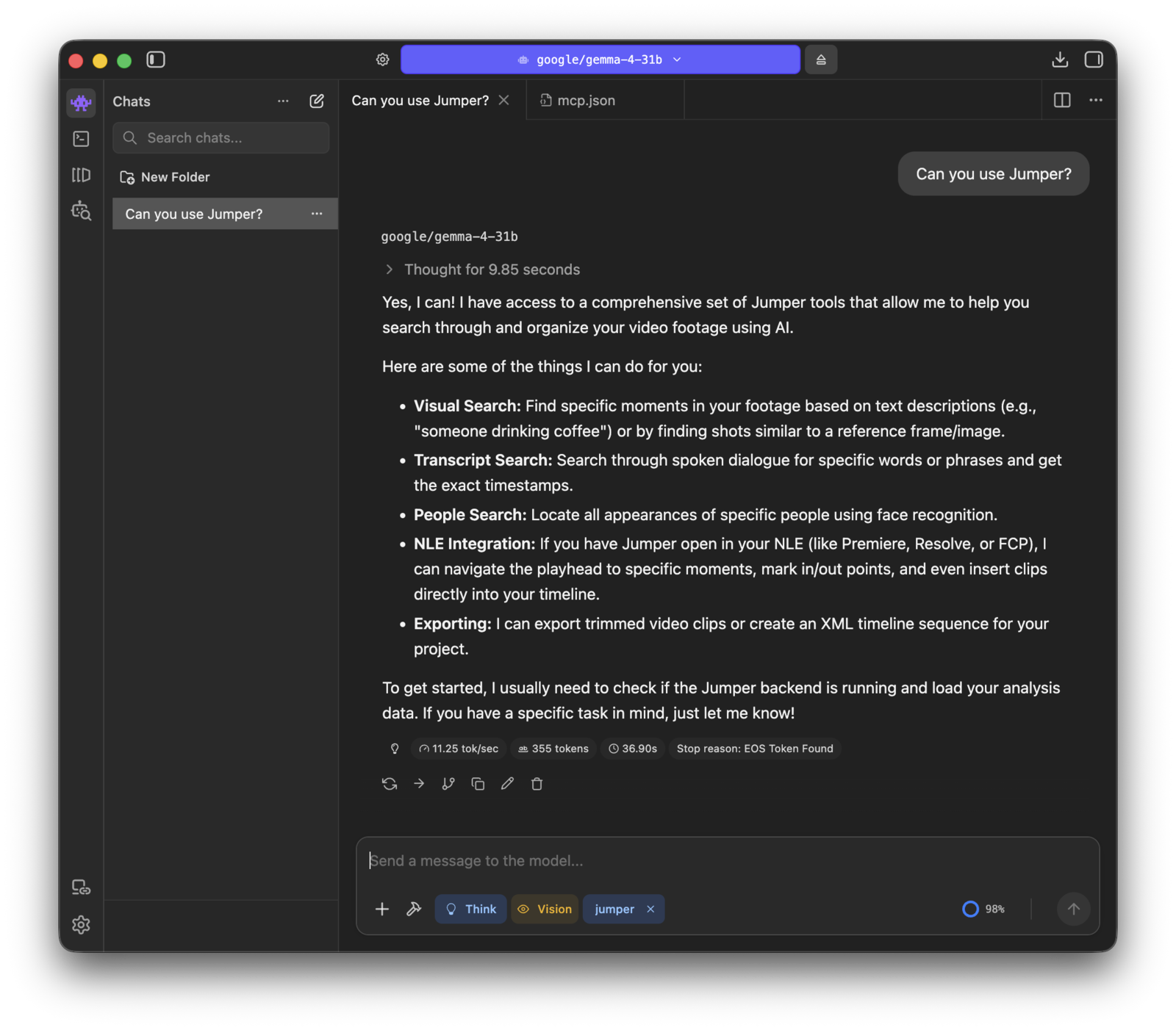
Once configured, LM Studio can access Jumper’s tools for visual search, transcript search, people search, timeline actions, and exports, all from a local model running on your workstation.
Negative search terms in visual search
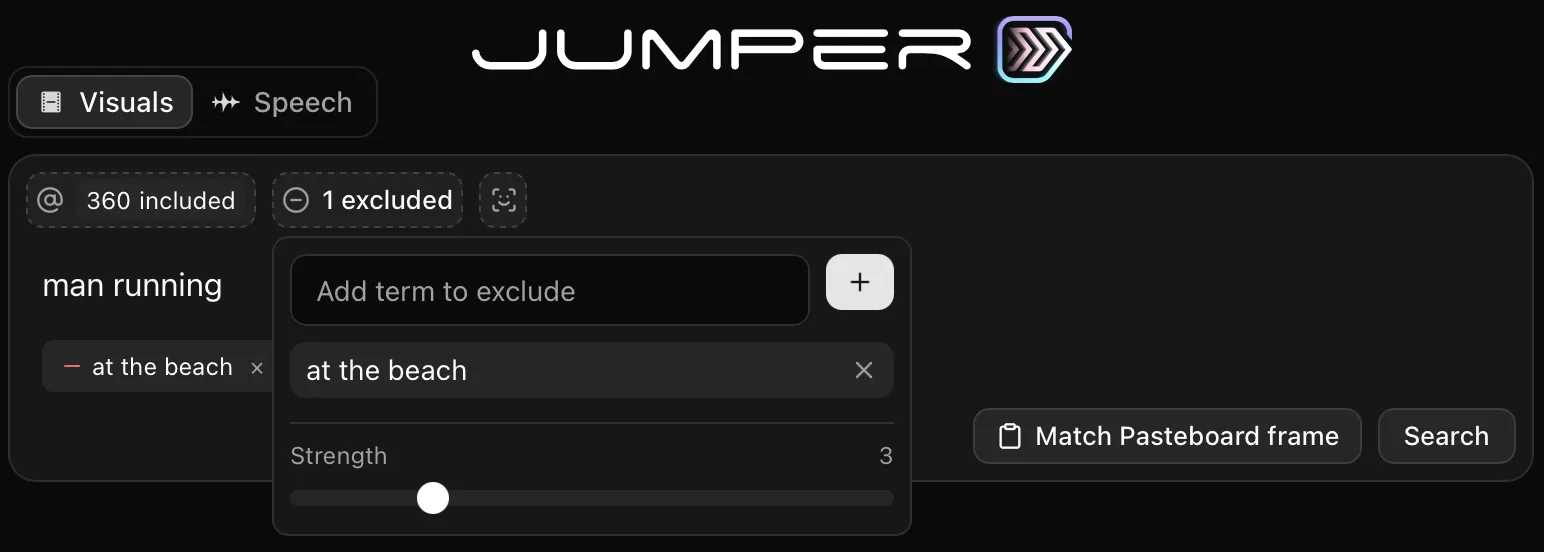
Visual search now supports negative terms, so you can tell Jumper what to avoid as well as what to find. For example, you can search for man running and add at the beach as an exclusion term to find shots of a running man that are not on a beach.
This gives you a faster way to steer results away from unwanted locations, objects, or situations without rewriting the whole query.
Add outside-project matches straight into your edit
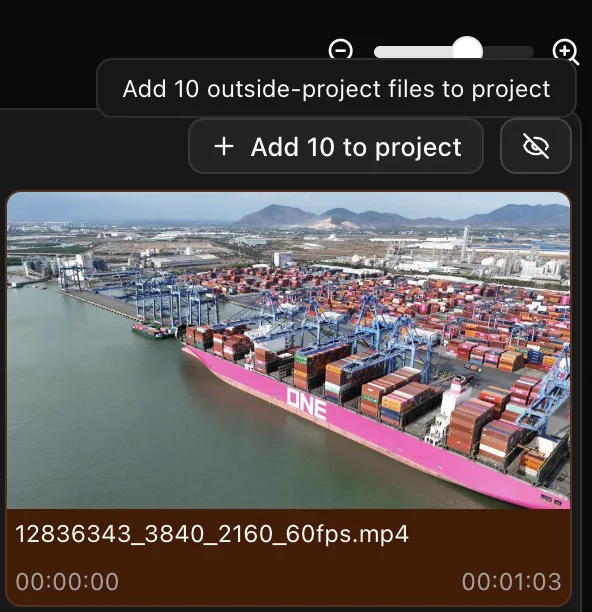
When using the Search All Analyzed Media option, if a visual search finds matching clips outside the current project, you can now use Add to project in Adobe Premiere Pro and DaVinci Resolve to import those clips directly from the search results into your active project, either one result at a time or all current matches at once.
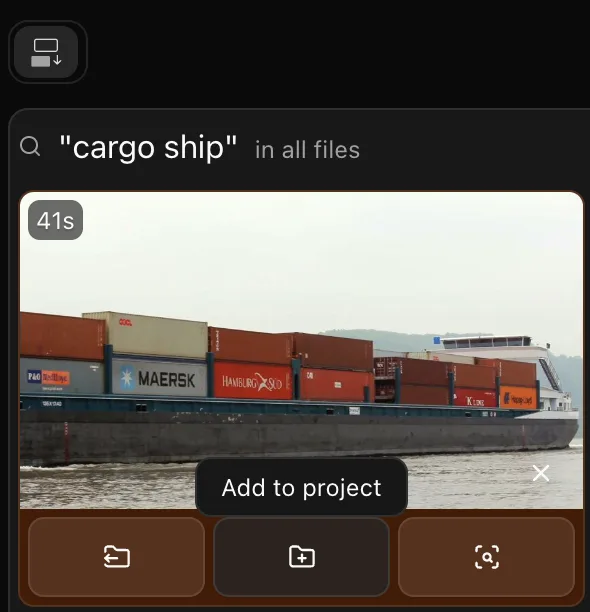
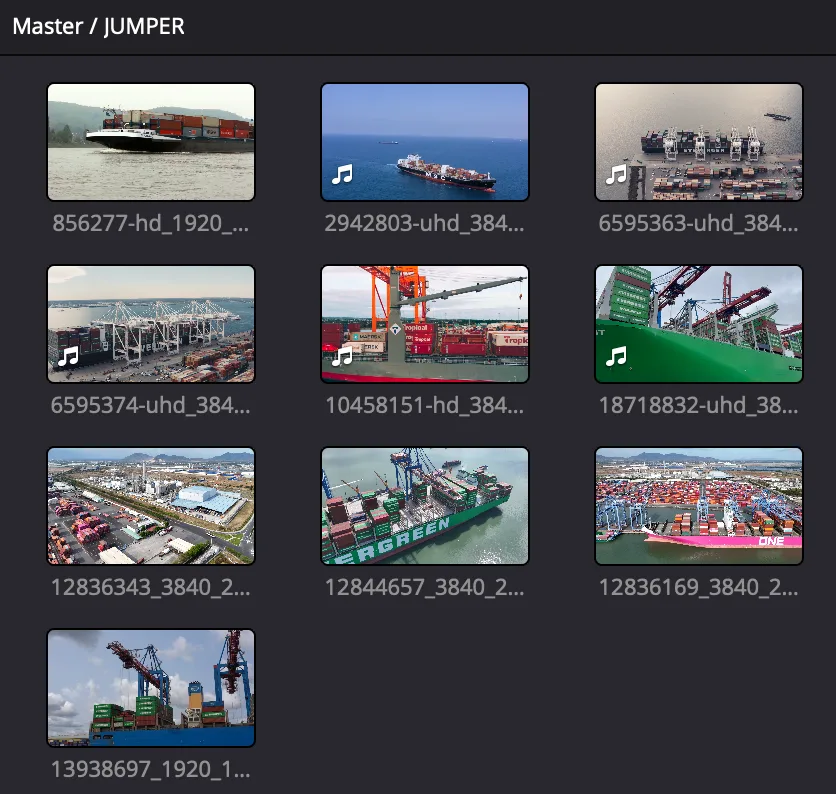
Imported clips land in a JUMPER bin in the active project, which makes it easy to pull useful archive or library footage straight into the cut the moment you find it.
Also in this release
Face analysis data now uses a more NAS-friendly packed TIFF structure instead of huge numbers of small JPEG files. For the full release notes, see the April 22, 2026 release notes.
As always, we’d love to hear your feedback. Join us on Discord to share ideas and get the latest updates.